Tree risk, not guesswork
We evaluate structure, defects, and targets so recommendations are tied to real risk. If pruning can reduce risk, we will explain what to cut and why.
Serving San Antonio, Texas & surrounding areas
24/7 Emergency Response
Get a clear, safety-first plan for pruning, removals, and tree risk concerns from a local team that works clean and carries proper coverage for residential and commercial properties.
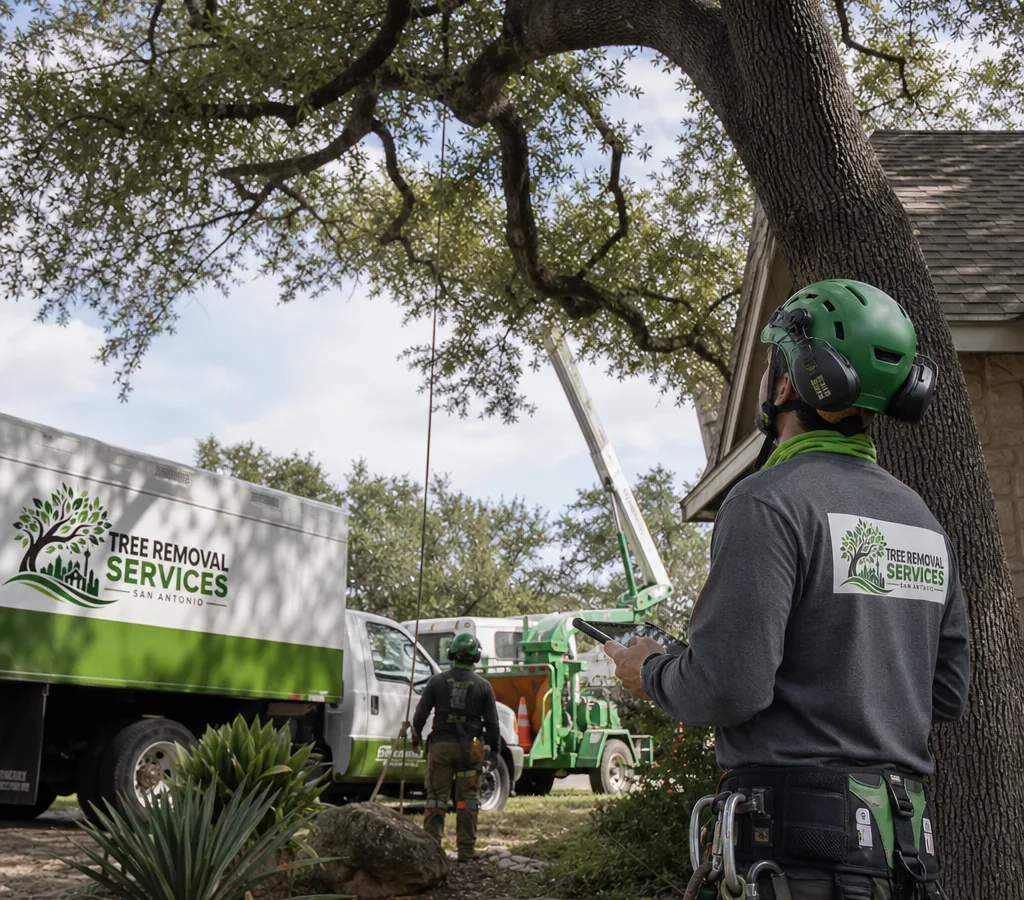
When you search for an arborist in San Antonio TX, you are usually trying to solve one of three problems: a tree that looks risky, a canopy that is growing into structures or lines, or a tree you want to keep healthy long-term.
At Tree Removal Services San Antonio, our work starts with an on-site look at the tree's structure and its surroundings. We check for deadwood, cracked unions, weak attachments, trunk defects, canopy imbalance, and signs of decline. We also look at targets, like roofs, fences, driveways, and sidewalks, because risk depends on what a limb can hit.
San Antonio trees also deal with real stressors: long heat stretches, sudden heavy rain, and wind that can find weak branch unions. That is why good pruning is less about making a tree look neat and more about reducing leverage, removing defects, and keeping weight where the tree can support it.
If you are also comparing local companies by specialty, you can get a quick sense of our broader work and service area through our San Antonio tree removal coverage, but this page focuses on arborist-led evaluation and decision-making for safe, correct tree work.
We evaluate structure, defects, and targets so recommendations are tied to real risk. If pruning can reduce risk, we will explain what to cut and why.
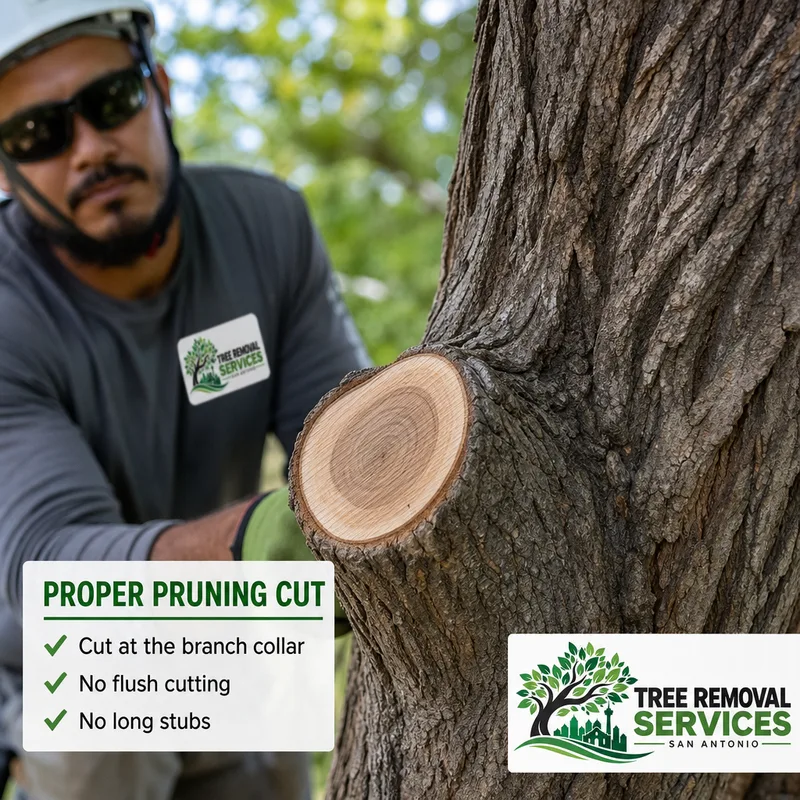
Pruning is done with attention to branch collars and natural growth habit. That helps reduce unnecessary stress and lowers the chance of regrowth problems.
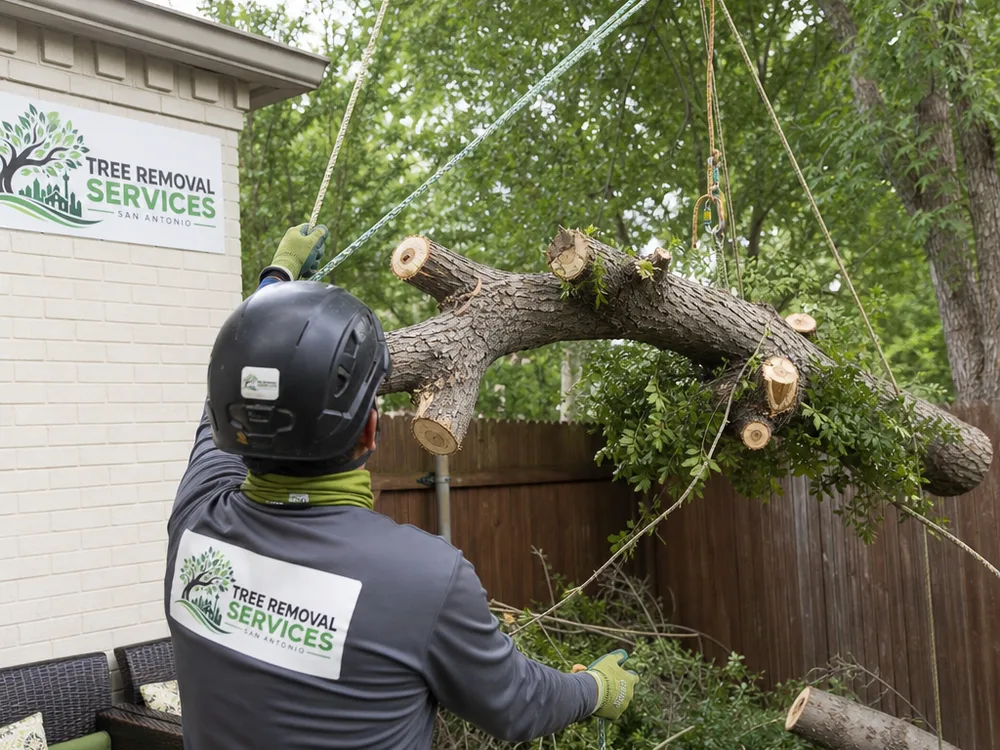
When removal is the right call, we plan the drop zone, rigging, and lowering points before cutting so work stays controlled around homes and tight yards.
We account for gates, driveways, patios, and landscaping early so equipment placement and debris handling are planned, not improvised.
You get a clear scope for debris removal, wood handling, and final cleanup so the property is left in a usable condition when we are done.
A certified arborist in San Antonio is most valuable when the decision is not obvious. Some jobs are straightforward. Others need a trained eye.
Common situations where arborist guidance helps:
In these cases, we talk through options in plain language: what you can prune, what you should remove, and what can be monitored. If a tree is a candidate for retention, we focus on practical steps like deadwood removal, clearance pruning, and weight reduction at problem ends rather than cosmetic shaping.
We walk the tree and the surrounding targets, then outline recommended work. If there are multiple trees, we help prioritize what matters first.
We plan equipment placement, debris routes, and controlled cutting methods. If utilities are nearby, we build the plan around safe clearances and the property layout.
Work is performed to the defined scope. For removals, we use sectional techniques when needed so pieces are lowered and controlled instead of dropped.
We clear limbs and debris per the agreed scope and confirm the result with you before leaving. If you want to keep firewood lengths, we discuss that up front.
Most arborist-led tree work in San Antonio typically ranges from about $150 to $600 for a small pruning job, while more involved pruning or a technical removal often runs $700 to $3,000+, depending on size and complexity.
Price changes with tree height and canopy spread, proximity to roofs and fences, whether rigging is required, access for equipment, haul-off needs, and the condition of the tree (dead, storm-damaged, or leaning). The exact cost is confirmed after an on-site assessment so the scope matches the risks and the property layout.
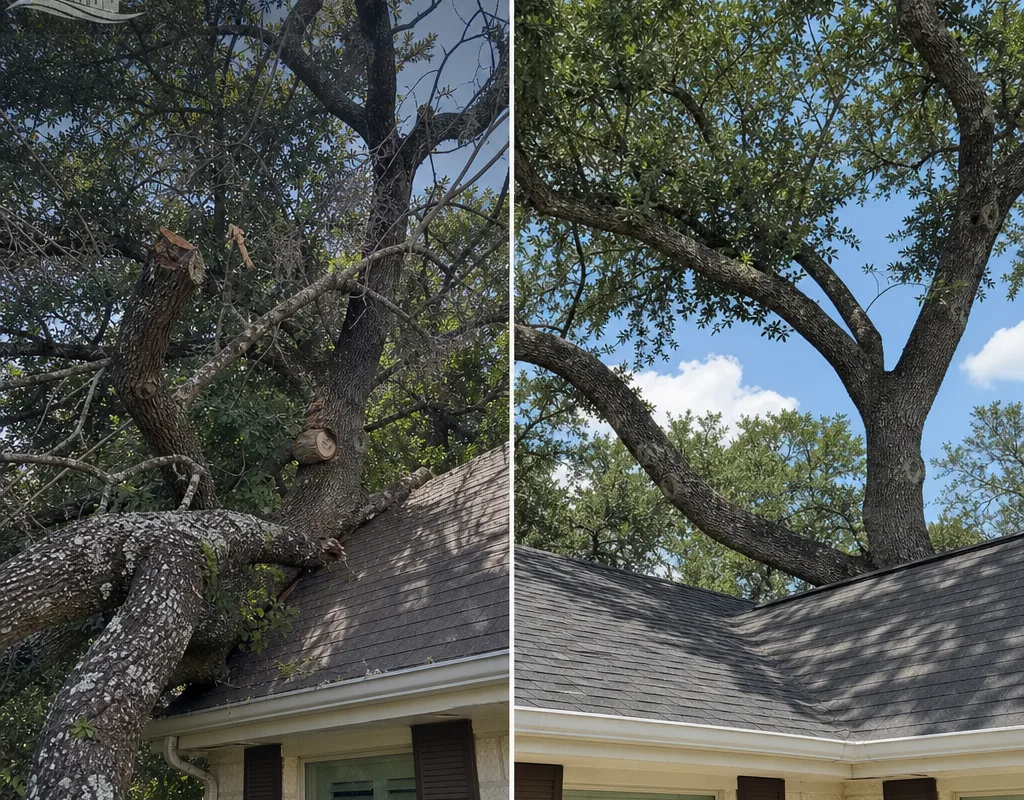
They walked me through what was actually risky and what just looked messy. The pruning took weight off the side over our roof and the cleanup was thorough.
Maria G.
We had a large tree in a tight space and I was worried about the fence and the neighbor's driveway. The crew controlled every piece down and kept the yard tidy.
Derrick L.
The estimate was clear about what was included and what wasn't. No confusion on haul-off, and the work matched the scope we discussed on-site.
Samantha R.
Choose based on credentials, a written scope, and a plan that matches the risks on your lot. A good San Antonio arborist will explain what cuts are being made and why, how they will control limbs near roofs or fences, and what cleanup and haul-off include before work starts.
Yes, when trees or large limbs are down, split, or hanging, the priority is making the area safe and preventing additional damage. We assess what is supported, what is under tension, and what needs controlled cutting and rigging so pieces come down in a planned way, especially near structures and driveways.
Often, yes, after an on-site assessment of structure, defects, and targets. If risk can be reduced with selective pruning, that is usually the first option; if the tree has major structural failure, severe decline, or cannot be made reasonably safe given nearby targets, removal may be the responsible recommendation.
We generally do not recommend topping because it creates weak regrowth and can increase long-term risk. If height reduction is needed, we discuss targeted reduction pruning and structural improvement cuts that keep the tree's natural form and reduce end-weight without creating a problem canopy.
Treat it as a safety issue and avoid DIY cutting. Trees near energized lines require the right approach and safe clearances; we will assess the layout and coordinate an appropriate plan for the work zone so the job is handled safely.
Many pruning jobs are completed in a single visit, while complex pruning or removals can take longer depending on access and rigging needs. After we see the tree and the property constraints, we can give a realistic time window for the work and cleanup.
Tell us what you are seeing, where the tree sits on the property, and what your goals are. We will recommend the safest, most practical scope for your trees in San Antonio and explain what the work will look like on the day of service.