Sectional takedown near structures
For trees close to homes, fences, and tight lot lines, we remove the tree in manageable pieces and lower sections under control.
Serving San Antonio, Texas & surrounding areas
24/7 Emergency Response
When a tree is cracked, leaning, crowding a roofline, or dropping heavy limbs, you need a crew that can cut it down safely, control every piece, and leave your yard clean. Tree Removal Services San Antonio handles careful felling, sectional takedowns, and haul-off with dependable scheduling across the San Antonio area.
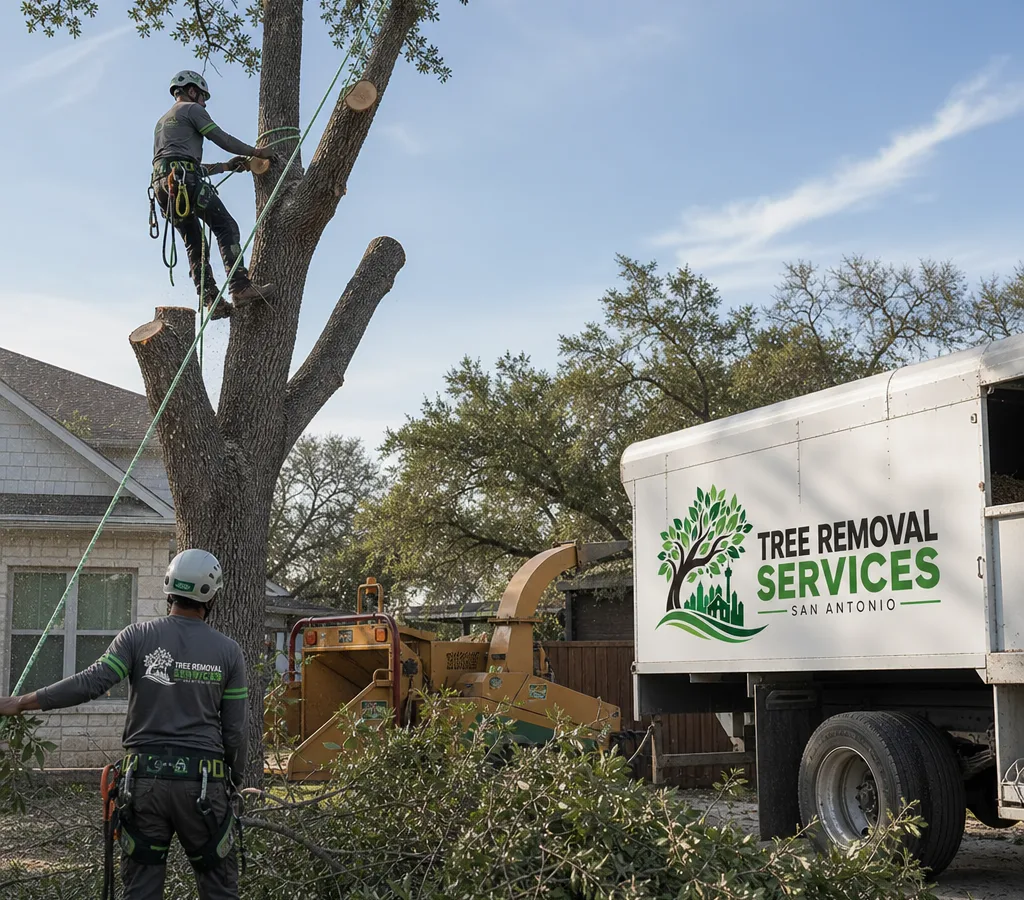
If you are searching for tree cutting San Antonio, you are usually dealing with one of three situations: a tree needs to come down, a hazardous limb needs to be removed before it falls, or growth is interfering with your roof, driveway, fence, or utility clearance.
In older neighborhoods with tighter lots, cutting a tree often means removing it in pieces instead of dropping it whole. That is common around Alamo Heights where trees sit close to homes, garages, and neighboring fences. In areas with bigger front yards like Stone Oak, the space can be better, but the trees can be taller and heavier, which still requires controlled rigging and clean landing zones.
We plan each job around access, targets such as rooflines, windows, sheds, and fences, and what we can safely lower with ropes versus what can be free-dropped. When the safest plan is to remove the tree, we focus on predictable cuts, steady lowering, and full cleanup so you are not left with rounds, brush piles, or ruts across the lawn.
If you are also comparing providers for broader San Antonio tree removal, this service is the same core work: safe cutting, controlled handling, and cleanup, sized to your specific tree and property.
Tree cutting goes wrong when a tree is under tension, the fall path is misread, or weight shifts unexpectedly. We treat every cut as a load-handling problem, not just a chainsaw problem.
Typical safety controls we use include:
San Antonio weather can change quickly, and wind matters. If gusts pick up or the canopy is moving, the plan may shift to smaller sections or a different lowering angle. The goal is simple: each piece goes where it is intended to go, and nothing surprises the homeowner.
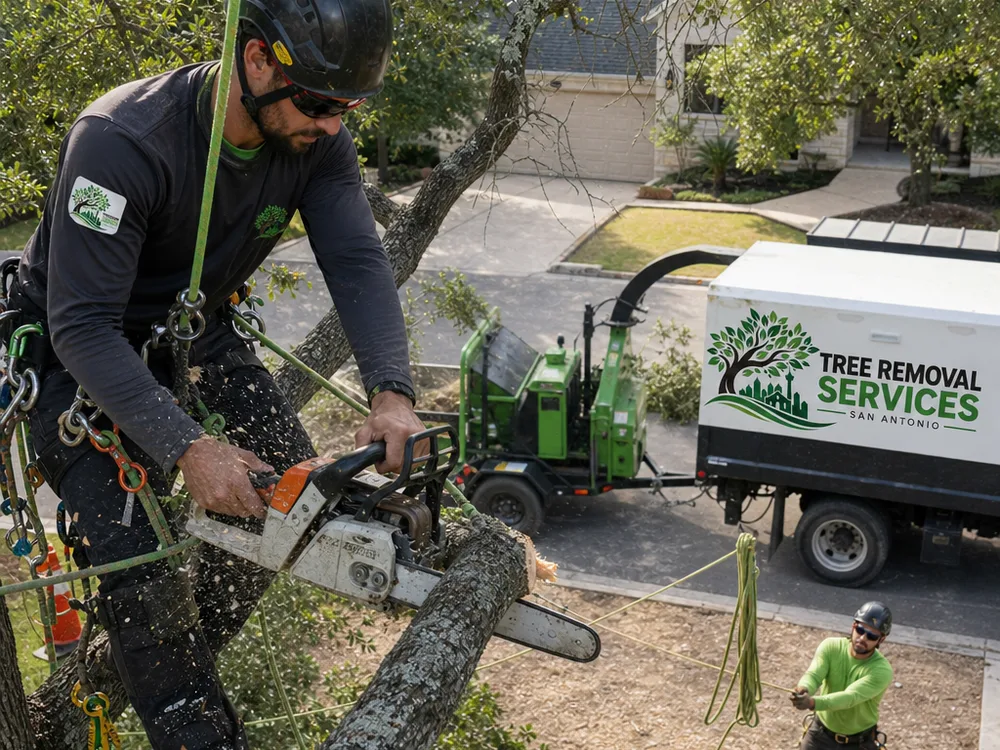
For trees close to homes, fences, and tight lot lines, we remove the tree in manageable pieces and lower sections under control.
When there is a safe fall path and room to work, we can fell the tree and process it on the ground, then haul away debris.
If a limb is cracked, hanging, or overextended, we cut it back safely so it does not come down on a roof, driveway, or walkway.
After high winds, broken tops and split trunks can be unstable. We stabilize the work area and remove dangerous sections first.
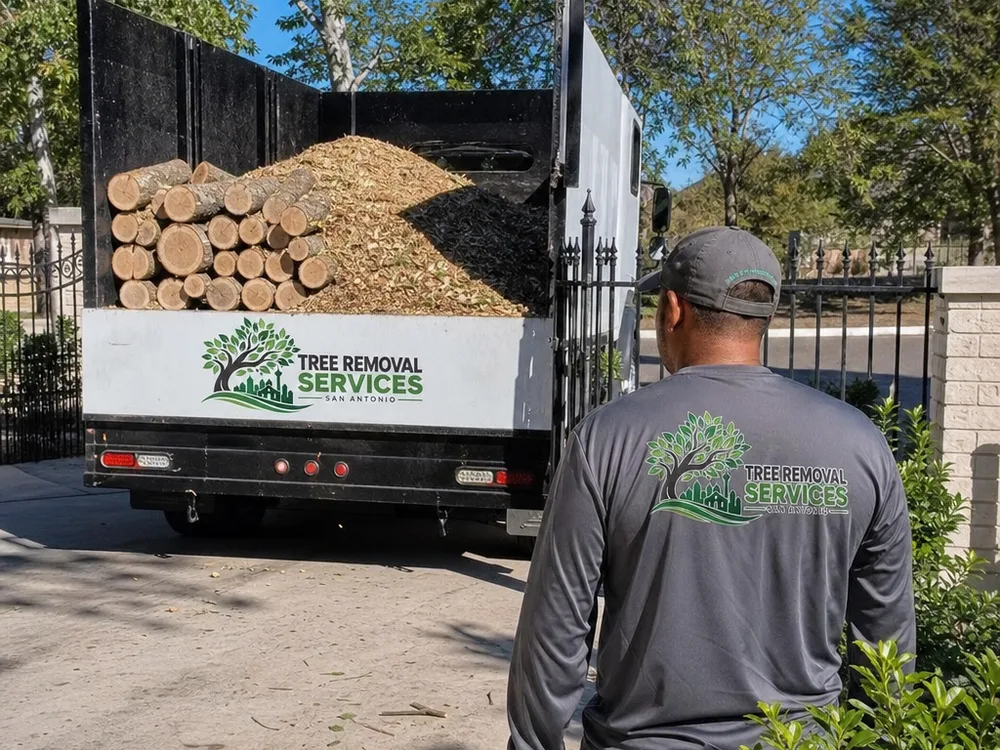
You should not be left with piles. We chip and haul debris and load out logs or rounds based on the agreed scope.
We cut back growth that is blocking gates, crowding parking areas, or rubbing against rooflines and siding.
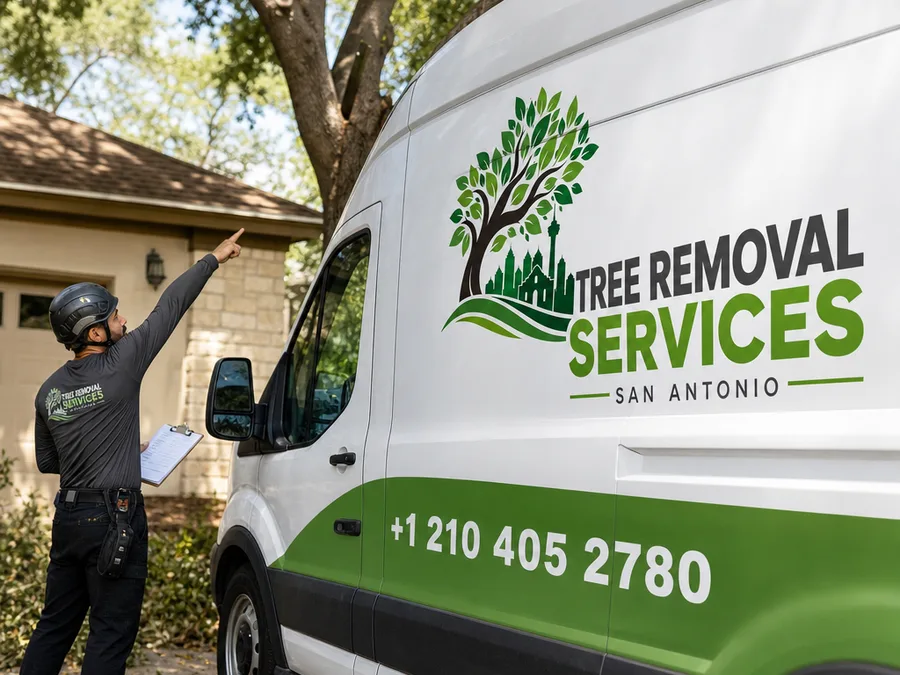
We look at the tree's lean, crown weight, visible defects, and what is within striking distance: roof edges, power lines, neighboring property, and traffic areas. Then we pick the safest cutting approach.
We stage equipment where it will not damage landscaping and set the drop zone. If pieces must be lowered, we set rigging points and rope paths before cutting begins.
We cut in a sequence that manages weight and tension. Near structures, we remove limbs and trunk sections in order, lowering heavy pieces instead of letting them swing or fall.
We chip brush, cut logs to manageable lengths, and rake and blow off hard surfaces. The goal is to leave the area tidy and usable right away.
Tree cutting in San Antonio typically ranges from about $250 to $900 for smaller trees or single hazardous limbs, while large removals near homes commonly run $900 to $2,500+. Multi-tree or complex rigging jobs can be higher.
Final cost depends on tree height and trunk diameter, how close it is to structures, whether pieces must be lowered with ropes, crew access such as gates, slopes, and tight side yards, and what you want done with the wood and debris. Exact pricing is confirmed after an on-site look at the tree and the work area.
“We had a big limb hanging over the garage after a windy night. They explained how they would lower it, set up the area, and the cut went exactly where they said it would. Cleanup was thorough, including the driveway.”
“Tight backyard, lots of plants we didn't want crushed. They took the tree down in sections and hauled everything out the same day. No damage to the fence or patio.”
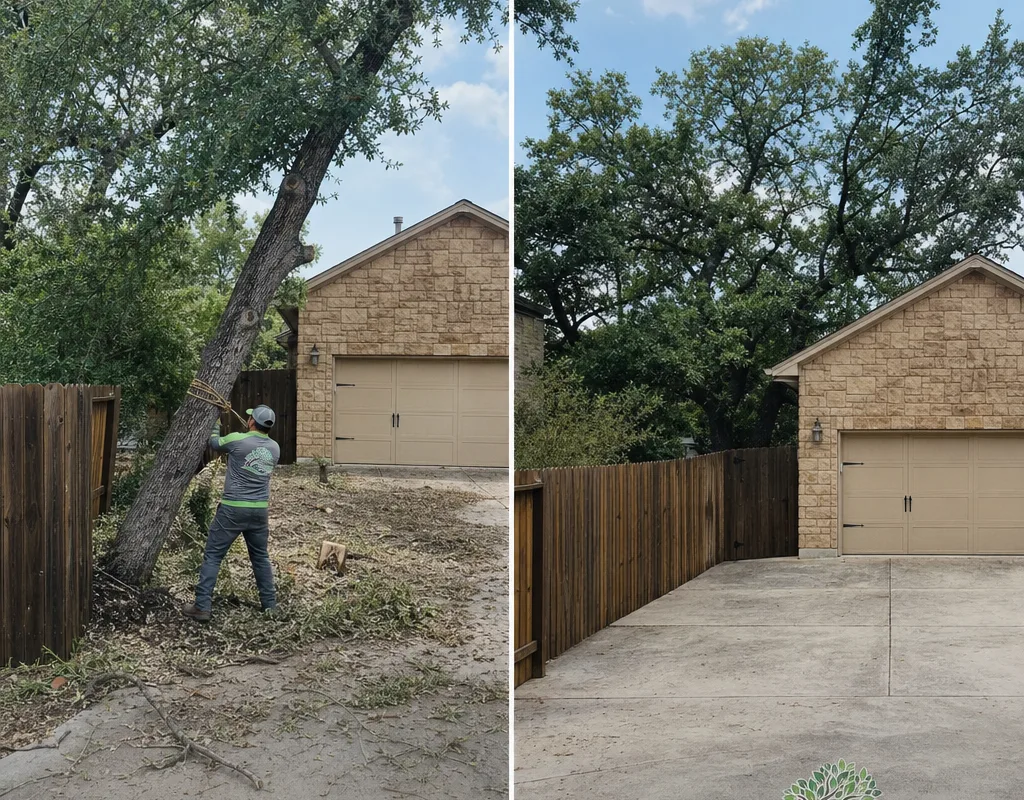
Yes, when a full felling is not safe, we use sectional takedown and rigging to remove the tree in pieces. This is common on tighter lots where there is no clean fall path, and it lets us lower limbs and trunk sections away from roofs, windows, and fences.
It helps to be available at the start so we can confirm the scope, access points, and where debris will be staged. If you cannot be home, many customers arrange access and approvals in advance, and we confirm the plan before work begins.
Storm damage is prioritized based on immediate risk, such as hanging limbs, split trunks, or trees threatening a roofline. After wind events in the San Antonio area, schedules can fill quickly, so sharing photos and the exact hazard helps us triage and plan the safest approach.
Yes, haul-off and cleanup can be included in the scope, and we can also cut wood into manageable lengths if you want to keep it. Disposal needs and truck access are part of the estimate because they affect labor time and load-out.
A tree is often urgent when it is actively failing or likely to fail soon: visible cracks, a split leader, a hanging limb, sudden lean, or dead sections over a driveway or living area. If you are unsure, an on-site assessment can confirm whether targeted limb removal is enough or full removal is safer.
Work near energized lines requires extra precautions and sometimes coordination with the utility depending on clearance and risk. If any limb is within striking distance of overhead lines, do not attempt DIY cutting; we will assess the safest method and tell you what needs to happen before cutting starts.
Tell us what you are seeing, where the tree sits on the property, and what you want done with the debris. We will confirm the safest cutting approach, the cleanup scope, and a straightforward schedule for your San Antonio job.