Hazard-focused assessment
We document what is damaged, what is likely to fail next, and what targets are at risk, then recommend the safest scope—removal, reduction, or stabilization where appropriate.
Serving San Antonio, Texas & surrounding areas
24/7 Emergency Response
Get clear tree assessment and guidance for hazardous conditions, declining health, pruning decisions, and possible removal. Recommendations account for San Antonio's climate, common tree concerns, nearby structures, and the condition of each tree.
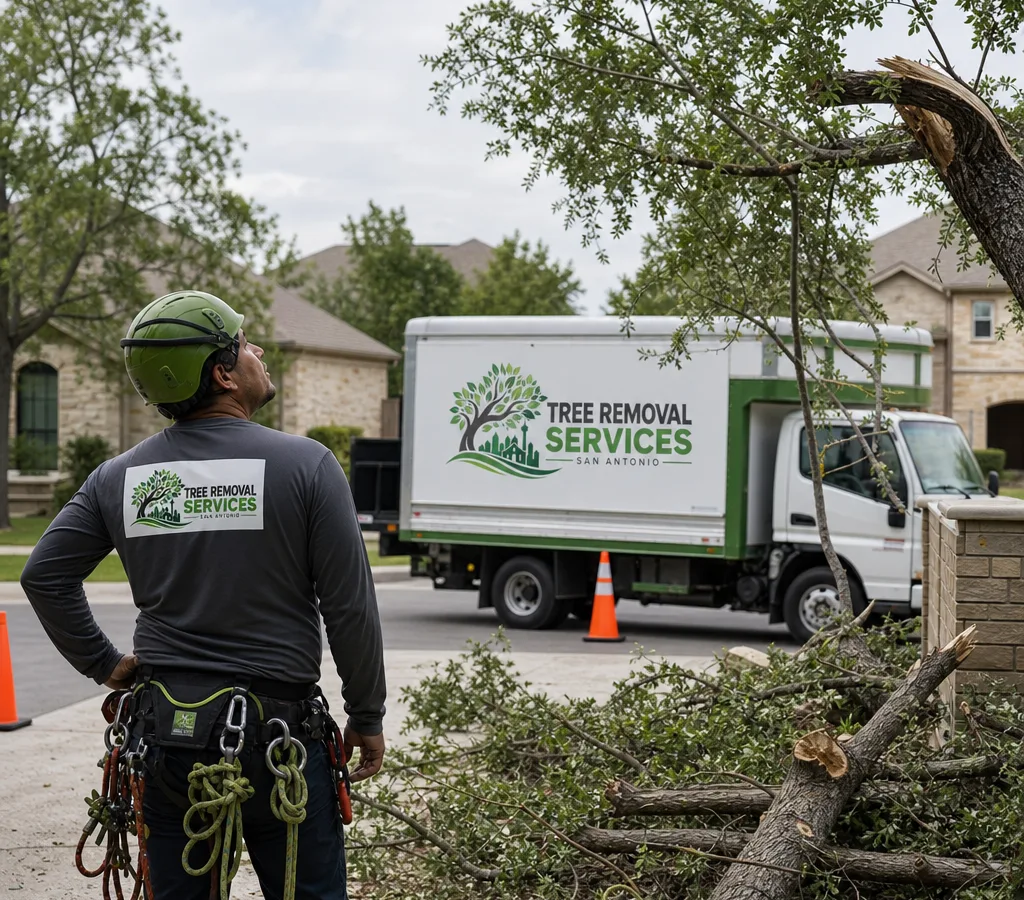
A tree assessment separates visible symptoms from the underlying concern. It considers canopy condition, branch structure, trunk defects, roots, soil changes, lean, and nearby targets such as roofs, sidewalks, fences, and vehicles.
The result may be a recommendation to monitor the tree, adjust maintenance, complete selective Tree Pruning, or seek additional Arborist Services. If defects or decline create risk that cannot be reduced responsibly, Tree Removal may be recommended.
San Antonio assessments should also account for prolonged heat, compacted soils, drought stress, intense storms, and local oak health concerns. Those site conditions help determine whether symptoms point to temporary stress, ongoing decline, or an immediate safety issue.
A sound recommendation starts by identifying the condition that matters most and the consequences if it progresses. Assessment is especially useful when symptoms are gradual, the tree is valuable to the property, or pruning and removal both appear possible.
Common reasons to request guidance include:
Storm damage is one possible trigger, not the page's main focus. When weather has already broken or destabilized a tree, see our Storm Damage Tree Removal guidance for that specific situation.
We document what is damaged, what is likely to fail next, and what targets are at risk, then recommend the safest scope—removal, reduction, or stabilization where appropriate.
Storm damage often involves service drops or nearby distribution lines. We plan access and cuts around overhead hazards and coordinate the safest next step when a utility needs to be involved.
Storm debris piles up fast. We chip and haul what we remove, then rake and blow down hard surfaces so you are not left with a yard full of scattered limbs.
Many properties in areas like Alamo Heights and Terrell Hills have mature trees close to structures and boundary fences. We use sectional removal and lowering methods to protect what is underneath.
Some trees need immediate action; others can be monitored or scheduled. We explain why a condition is urgent, what temporary risk controls are possible, and what a reasonable timeline looks like.
San Antonio is a tree-forward city, and many neighborhoods have established canopies that create real shade and real risk when storms hit. A city arborist mindset means thinking beyond today's cut list.
Oak decline can have several possible causes, so symptoms should be evaluated before major work is planned. Our Oak Wilt page explains one important San Antonio concern. A useful assessment should explain the observations, level of concern, and recommended next step in plain language.
We look for cracks, splits, hangers, root plate movement, and targets like roofs, cars, sidewalks, and fences. We also check access for equipment and safe haul-out routes.
You get a clear description of what will be removed or cut back, how pieces will be controlled, what will be hauled away, and what area we need kept clear during work.
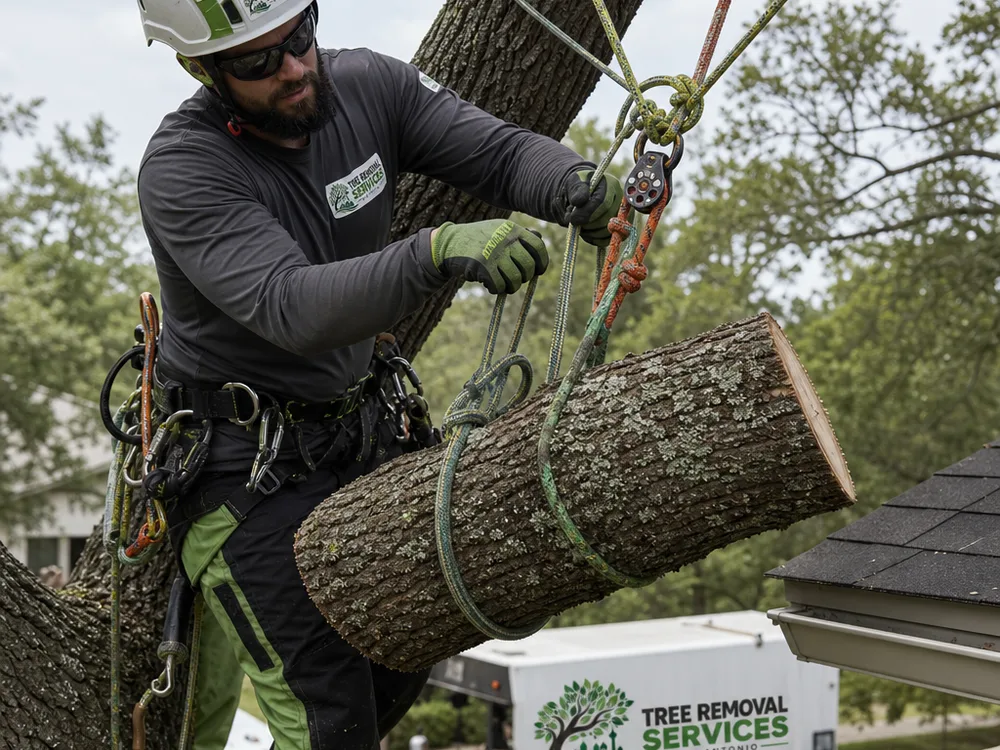
Depending on the tree and the site, work may involve climbing, rigging, sectional dismantling, or ground-based removal. We prioritize controlled movement of wood near structures.
We chip and stage material for hauling, then clean up the work zone. If you want the stump handled as well, we can discuss that as a separate scope.
Assessment scope depends on the number and size of trees, site access, the complexity of visible defects, and whether the concern involves health, structural risk, pruning, or a potential removal recommendation.
A focused visit for one tree differs from reviewing several mature trees across a property. The purpose is to define the concern clearly and recommend an appropriate next step rather than price unrelated work before the condition is understood.
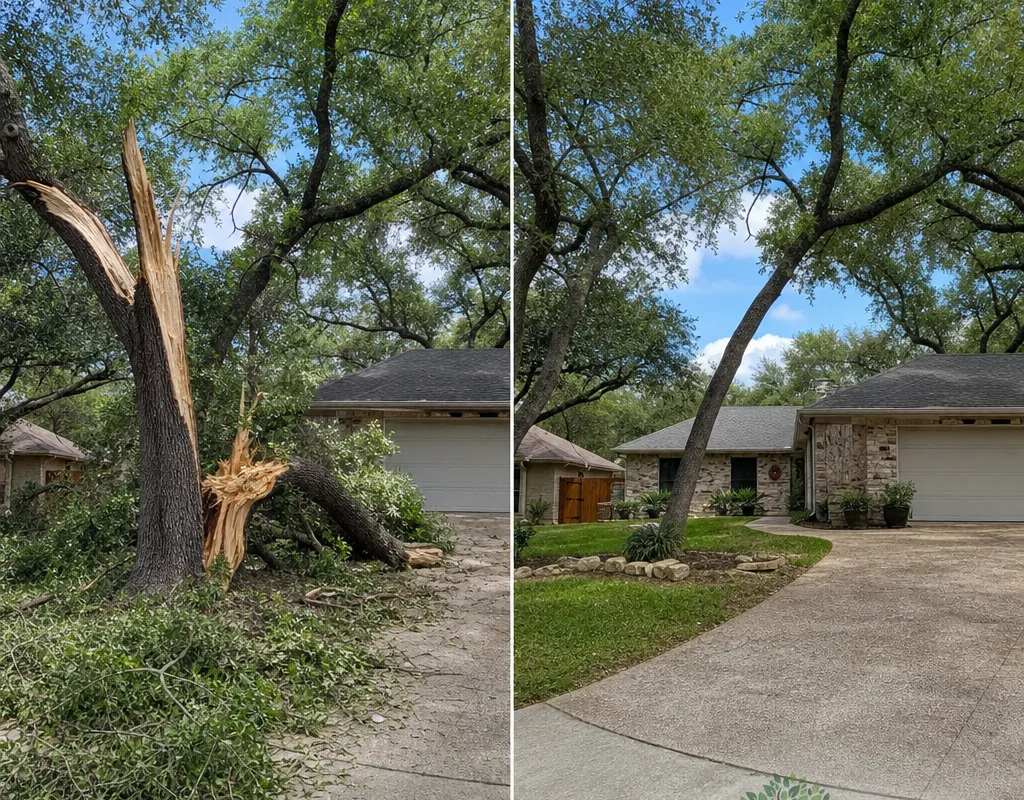
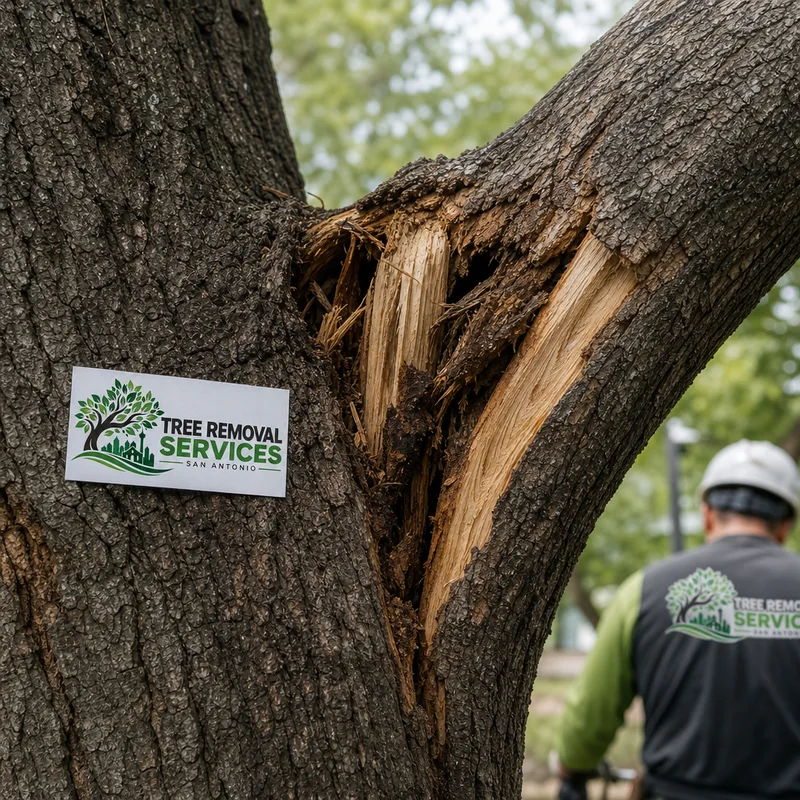
A tree needs urgent removal or immediate mitigation when it has a major trunk crack, a split leader, a hanging limb over a target, or root plate lift that changed the lean. In San Antonio, wind can re-load a damaged canopy quickly during follow-up storms, so it is smart to get an on-site assessment if anything is hanging, cracking, or suddenly leaning.
Yes, when access allows, hanging limbs over roofs are usually handled with controlled lowering using ropes so pieces do not swing or drop onto the structure. The key is planning the cut sequence, setting an anchor, and choosing lowering points that keep the load away from edges and gutter lines.
If the tree is touching lines or within the utility's required clearance, the safest next step is often to involve the utility before any cutting happens. We can assess the situation on-site and explain what work can be done safely versus what needs utility coordination first.
We can haul storm debris away as part of the scope, and we can also leave firewood-length sections if you have a safe place to stack it. Let us know your preference during the assessment so the cutting, staging, and truck loading plan matches what you want.
We can document the observed storm damage and the work performed, which helps support an insurance claim when coverage applies. Photos of the failure point, notes on hazards like split trunks or hangers, and a clear written scope are usually the most helpful items to keep.
Response time depends on citywide demand and how dangerous the situation is, but we prioritize jobs with immediate safety risks like blocked driveways, trees on structures, and hanging limbs over occupied areas. If you share what failed and what it is threatening, we can advise the safest next step and schedule accordingly.
Share what you are seeing and where the tree is located. An on-site assessment can clarify health concerns, hazards, pruning options, and whether removal should be considered.