Targeted pruning, not random cutting
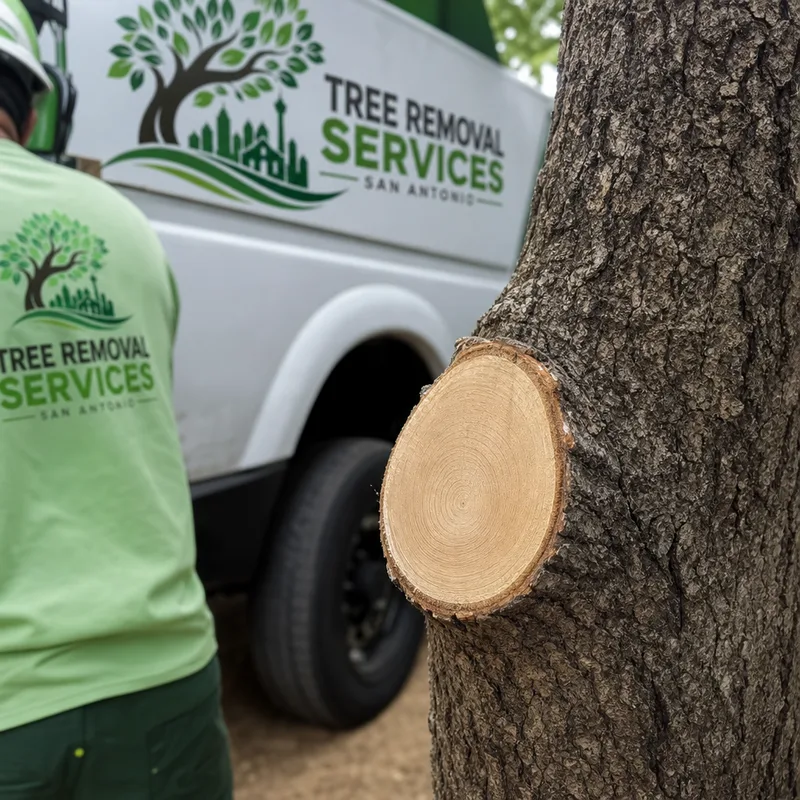
We trim to reduce weight on long limbs, clean up deadwood, and improve structure. Cuts are made at proper branch unions to help the tree seal and recover.
Serving San Antonio, Texas & surrounding areas
24/7 Emergency Response
Keep limbs off roofs and power lines, shape growth the right way, and leave the yard clean. Our crew trims with a clear plan, careful cuts, and fast debris haul-off across San Antonio.
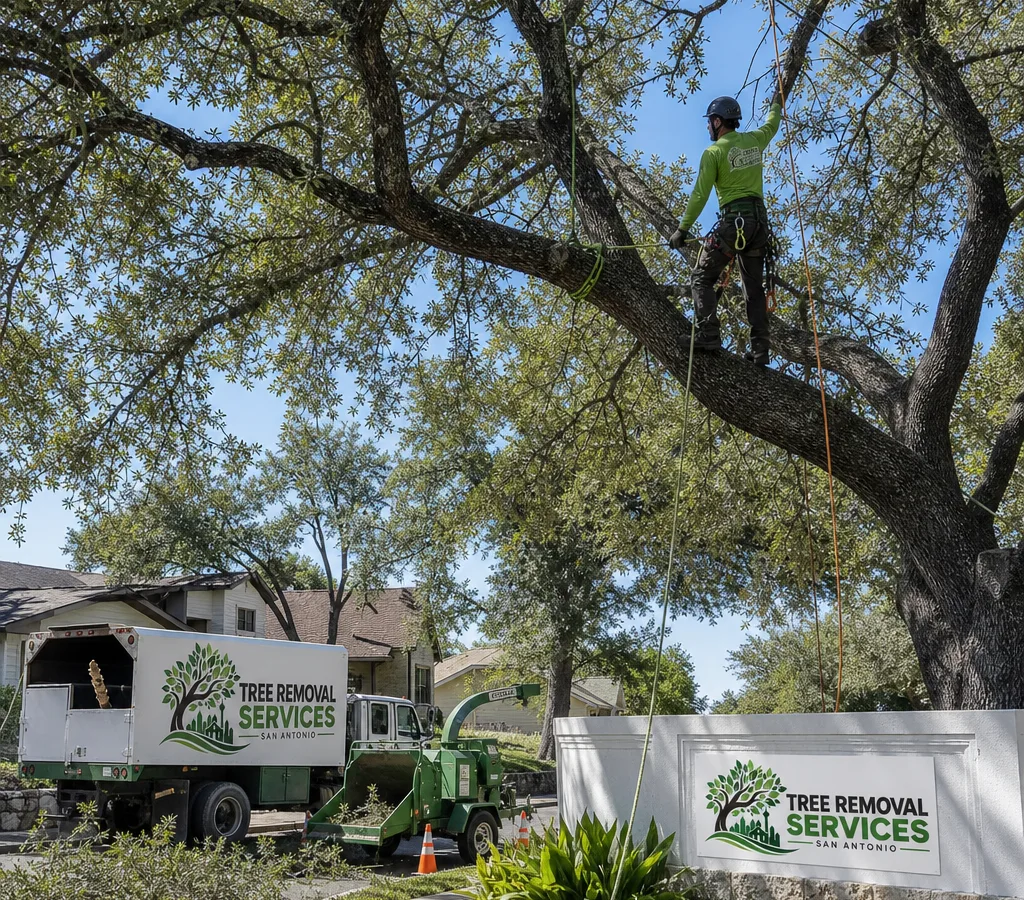
Tree trimming is part safety work and part long-term tree health. In San Antonio, wind and sudden storms can turn overextended limbs into broken branches fast, especially on broad-canopy trees like live oaks. Good trimming reduces that risk, improves clearance over driveways and roofs, and keeps the canopy balanced so the tree is less likely to fail.
When you book tree trimming San Antonio TX service with Tree Removal Services San Antonio, you get straightforward recommendations and a scope that matches your goals. Some properties need hazard reduction near structures, others want improved light for turf, and some simply want a cleaner look before selling. We will tell you what we can safely and responsibly remove, what should stay, and what should be deferred to a future trim cycle.
If your project is primarily about eliminating a dangerous tree or a failing limb, it may be better handled as tree removal in San Antonio rather than routine pruning. We will help you choose the safer path after a quick look at the tree's condition and location.
We trim to reduce weight on long limbs, clean up deadwood, and improve structure. Cuts are made at proper branch unions to help the tree seal and recover.
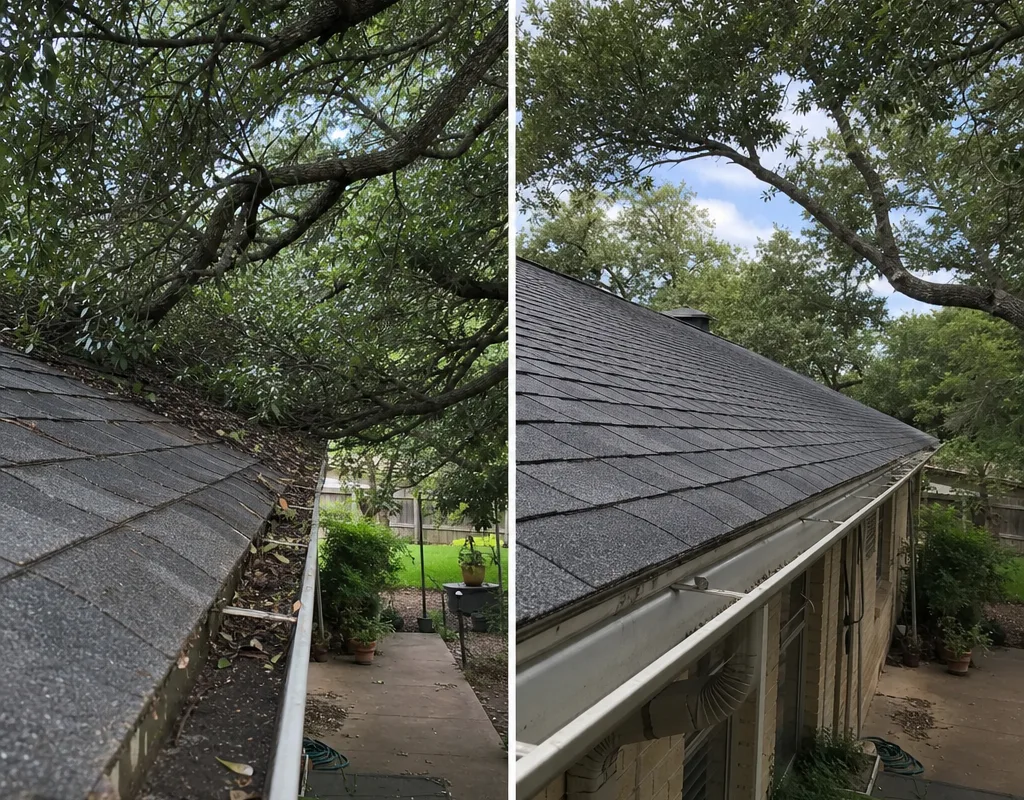
We create workable separation from roofs, gutters, and siding, and raise low limbs over driveways and walkways when the tree and site allow it.
Selective thinning can reduce sail effect and improve airflow. We avoid over-thinning that can stress the tree or cause sunscald on newly exposed limbs.
If a limb has cracks, included bark unions, or heavy end weight, we can reduce it or remove it safely with rigging so it does not swing into the house or fence.
Brush, logs, and leaves are collected, the work zone is raked and blown down, and debris is hauled away so you are not left with piles at the curb.
We plan access and drop zones, use ropes for control when needed, and stage equipment to limit damage to lawns, beds, and edging.
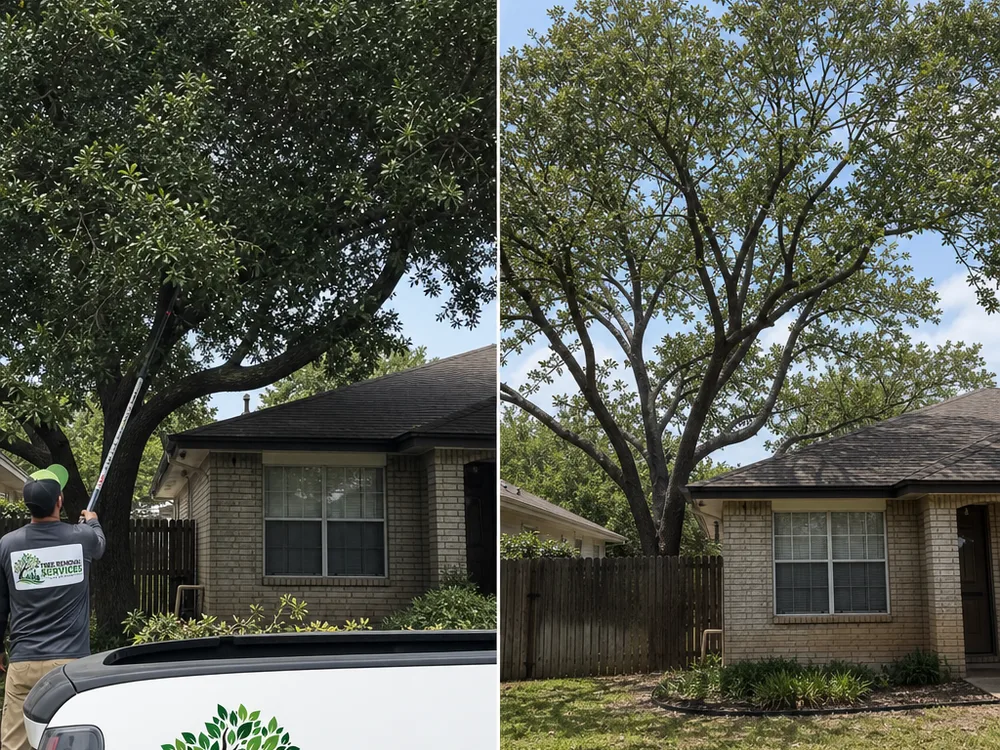
A quality trim is measurable in how the tree looks and how it behaves afterward. The canopy should look natural, not stripped or lion-tailed. Weight should be reduced on overextended limbs, and the tree should have balanced form rather than a lopsided crown.
We use pruning basics that hold up across species and property types:
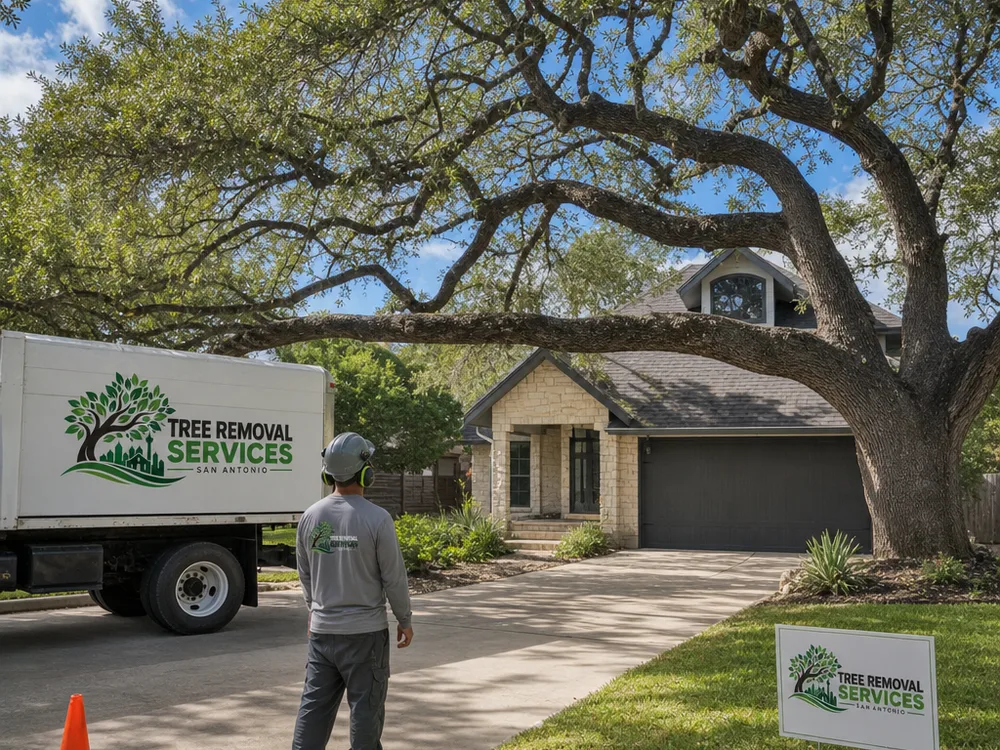
If you are in Stone Oak, fast-growing landscape trees can outpace your clearance needs in a few seasons, so we often plan a trim cycle that keeps limbs off roofs and driveways without taking too much at once. In Alamo Heights, many mature shade trees need careful reduction cuts and controlled rigging because space between homes and fences can be tight. Around Leon Valley, access and drop zones often determine whether we hand-carry brush to the chipper or rig pieces down to protect turf and landscaping.
If your tree is close to overhead lines, treat it as a safety issue. Keep people and ladders away and schedule an on-site assessment so we can decide the safest method and coordinate the work area.
We walk the property, identify priority limbs (clearance, deadwood, structural issues), and talk through what you want the tree to look like. You get a written scope so the work is clear before anything starts.
We plan drop zones, protect areas that matter, and set ropes and rigging when limbs must be lowered in pieces. We keep pathways and driveways as open as the job allows.
We prune with proper cut placement and remove weight in stages. For larger limbs, we control the swing and descent to protect roofs, fences, sheds, and landscaping.
Brush is chipped, logs are loaded, and we rake and blow down the work area. We finish with a walkthrough so you can confirm the canopy and the cleanup meet expectations.
Tree trimming in San Antonio typically ranges from about $200 to $900 per tree for standard pruning, while large mature trees, tight access, heavy rigging, or multi-tree projects often run $900 to $2,500+ total. Small clearance trims cost less than crown reduction or structural pruning on big shade trees.
Your price depends on tree height and spread, how much is being removed, proximity to roofs or lines, crew time for rigging and hauling, and whether debris disposal is included. The exact cost is confirmed after an on-site evaluation of the tree and access.
Most trees can be trimmed year-round, but timing depends on the species, the goal (clearance vs. structure), and current stress on the tree. In San Antonio, many homeowners schedule pruning ahead of storm season for hazard reduction, while lighter maintenance trims are often planned when the tree is not under extreme heat stress.
We can evaluate trees near lines and recommend the safest scope, but work close to energized conductors has strict safety limits. If the tree is in the utility right-of-way or limbs are contacting lines, the safest approach may require coordination with the electric utility before any cutting starts.
Yes, clearance pruning is one of the most common reasons for tree trimming in San Antonio TX, and it can reduce leaf buildup and branch abrasion on shingles and gutters. We aim for practical separation while keeping the canopy balanced so the tree does not become lopsided or overexposed.
Topping is generally a poor practice because it creates weak regrowth and large wounds that can lead to decay and future breakage. If height reduction is needed, we typically recommend selective reduction cuts or structural pruning that lowers end weight without leaving stubs.
Many single-tree trims take a few hours, while large trees, multiple trees, or tight-access yards can take most of a day. The timeline depends on climbing and rigging needs, how much debris is generated, and how far brush must be carried to the chipper.
Yes, debris cleanup and haul-off can be included so you are not left with brush piles. If you want to keep some wood for firewood or habitat, tell us during the estimate so we can plan the cut lengths and stacking location.
People use the terms interchangeably, but pruning usually refers to health and structure focused cuts, while trimming often means clearance and shaping. On a real job, we typically do both: remove deadwood and problems first, then handle clearance and form.
Priority warning signs include hanging or cracked limbs, major dead sections, splits at the trunk, and limbs with heavy end weight extending over a roof, driveway, or play area. If you can see a fresh crack, sudden sag, or bark tearing after a storm, avoid the area and schedule an on-site assessment as soon as possible.
If you want a cleaner canopy, better clearance, and a yard that is actually cleaned up afterward, start with a quick on-site look and a written trimming plan.
Call for a Free EstimateTell us what you are seeing, where the tree sits on the property, and what outcome you want. We will confirm the safest scope, the cleanup plan, and the timing for your schedule.