Storm-season risk reduction
Selective reduction and deadwood removal lowers the chance of a heavy limb failing over roofs, fences, and parked vehicles when winds pick up.
Serving San Antonio, Texas & surrounding areas
24/7 Emergency Response
Get hazardous limbs under control, shape your canopy for healthy growth, and keep cleanup simple with a local crew that focuses on safe cuts and tidy results.
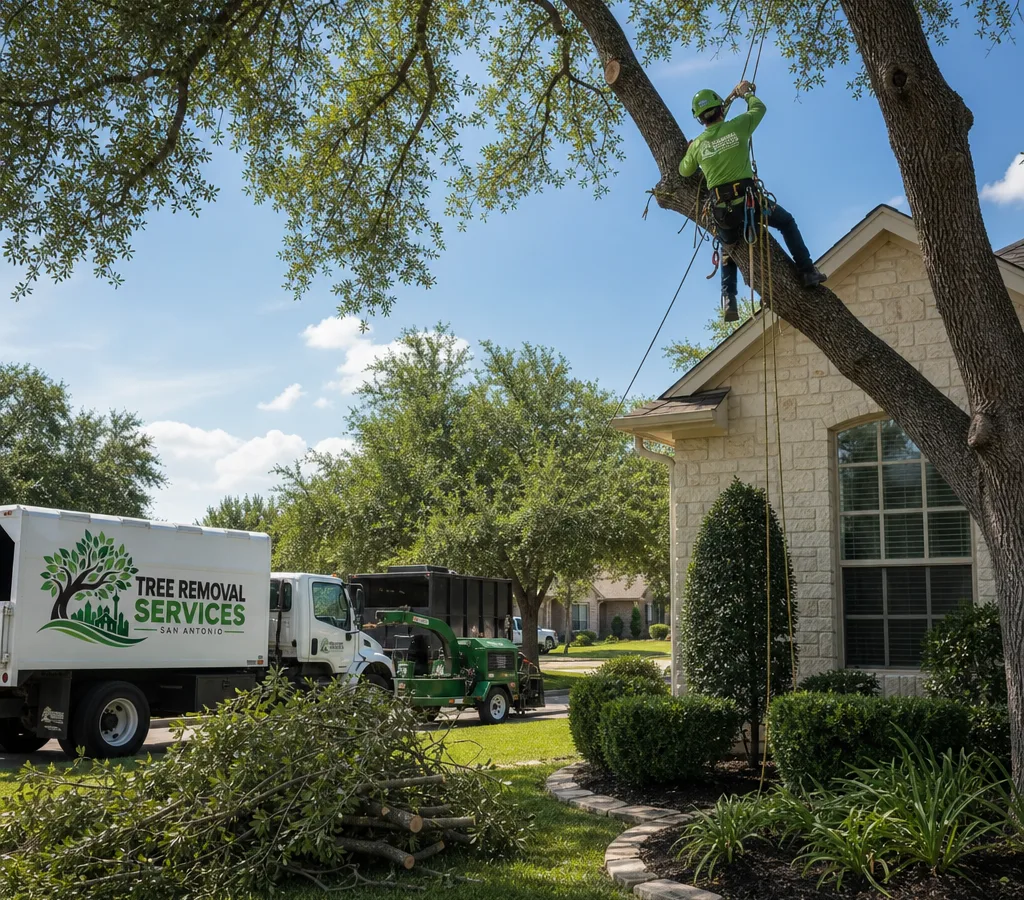
San Antonio tree pruning is part safety work, part plant care. The wrong cut can start decay, throw a tree out of balance, or trigger a burst of weak new growth. The right cut reduces risk over roofs and driveways, improves clearance over sidewalks and streets, and helps the tree put energy into strong, well-spaced branches.
At Tree Removal Services San Antonio, we prune with a clear goal: reduce hazards while keeping the structure and health of the tree in mind. That starts with an on-site look at what the tree is doing now—lean, weight distribution, deadwood, rubbing limbs, and dense interior growth—and what it needs to do next, whether that means wind-load reduction, clearance, or restoring shape after storm breakage. If you are comparing providers, ask how they choose cut locations, limit large-diameter removals, and manage drop zones around fences, AC units, and landscaping. Those details matter more than a quick “trim it back” promise.
If you also need a plan for a tree that is beyond pruning, our team handles tree removal in San Antonio as well, but this service is focused on keeping sound trees safer and better looking through correct pruning.
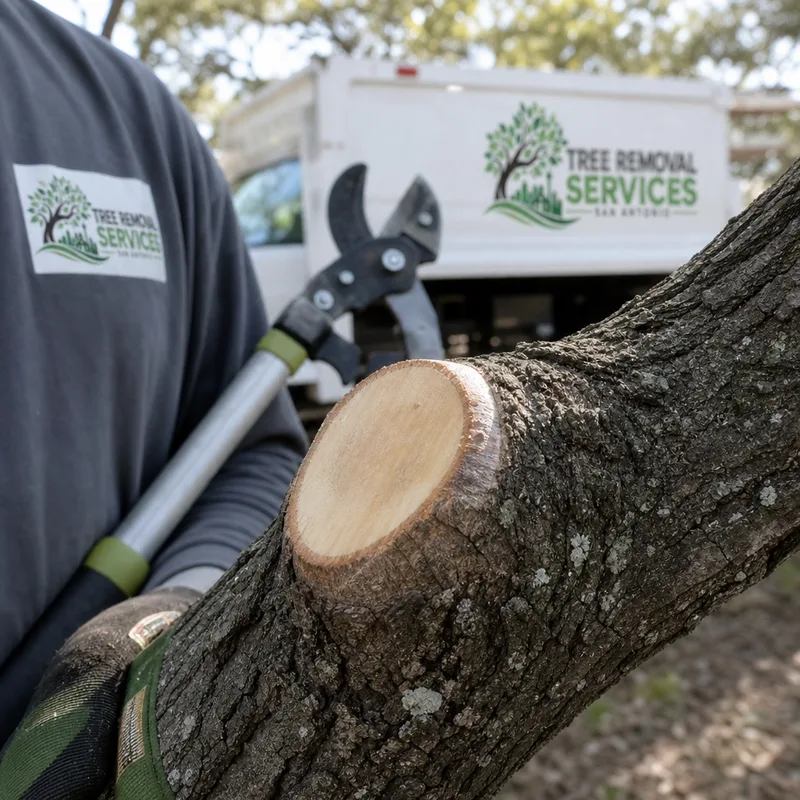
A good pruning job is easy to spot after the crew leaves: clean cuts, an intentional canopy shape, and no torn bark or random stubs. We follow standard pruning practice by cutting back to a suitable lateral branch or to the branch collar, so the tree can seal the wound as well as it can.
Common problems we correct around San Antonio properties:
We avoid topping and severe lion-tailing. Topping creates big wounds and unstable regrowth. Lion-tailing—stripping interior limbs and leaving tufts at the ends—shifts weight outward and can increase breakage risk. If a tree needs extreme reduction to “fit,” we will talk through realistic options before any cuts start.
Selective reduction and deadwood removal lowers the chance of a heavy limb failing over roofs, fences, and parked vehicles when winds pick up.
Branches that touch shingles or hang over valleys and gutters can cause abrasion, leaf buildup, and easy access for pests. Pruning creates workable clearance without over-thinning.
Targeted thinning can reduce dense, shaded interiors that stay damp and attract pests. The goal is an even canopy, not a hollowed-out tree.
Raising low limbs makes daily use safer for kids, guests, deliveries, and vehicles, especially in tight driveways and side yards.
Removing broken, diseased-looking, or rubbing limbs helps the tree direct growth into sound wood while limiting ongoing wounding.
Pruning decisions change with the property, the tree, and how the space is used. San Antonio has a mix of older neighborhoods with large established canopies and newer developments with trees planted closer to structures. That means we often balance clearance needs with long-term structure.
Examples we see often:
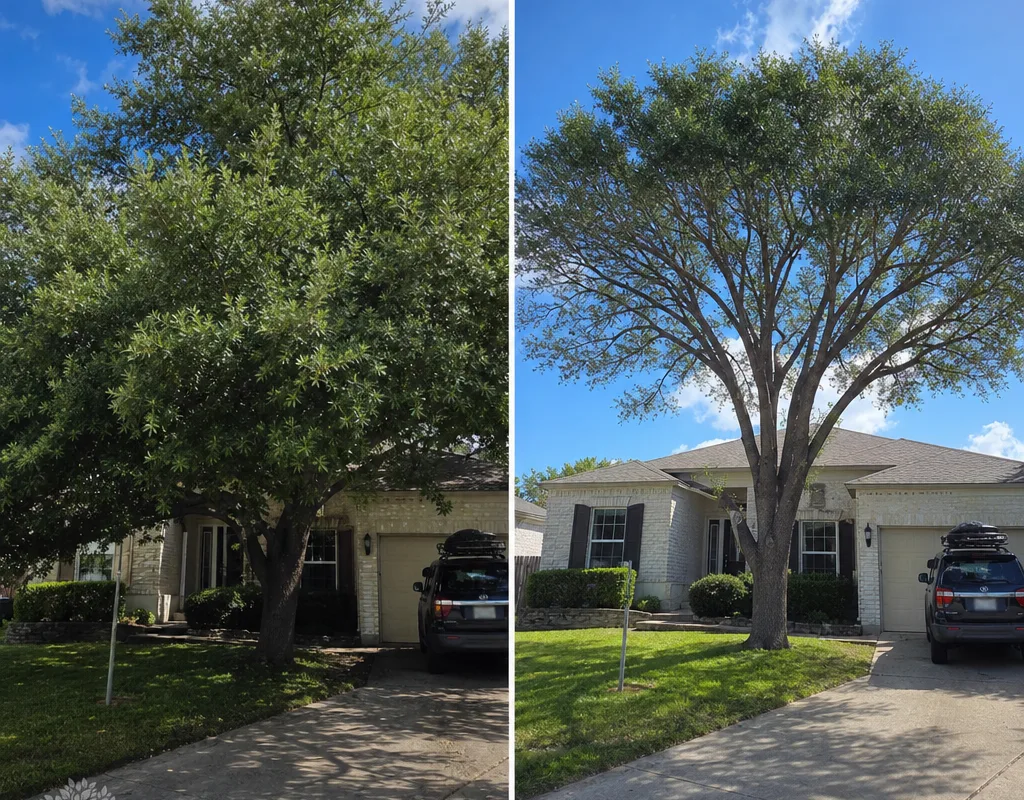
San Antonio weather also matters. Rapid growth periods can make a canopy feel like it needs constant trimming, but aggressive cuts can backfire. For many trees, smaller, well-chosen cuts on a repeating cycle keep the canopy stable and reduce the need for large removals later.
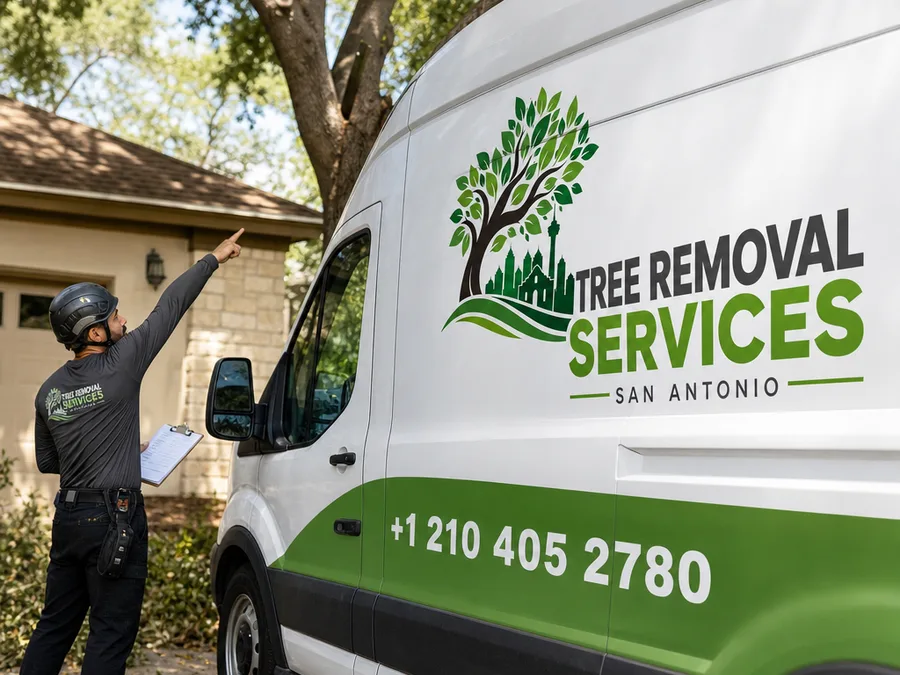
We walk the property with you, identify the specific hazards or clearance issues, and confirm what “done” should look like. If access is tight or targets are high-risk—roof edges, service lines, or fragile landscaping—we plan the drop zone and rigging approach.
We choose pruning points that preserve structure and avoid unnecessary large wounds. When possible, we reduce weight by making reduction cuts to laterals rather than stripping the interior or cutting everything to the same length.
For heavier limbs or tight quarters, we use ropes and friction devices to lower sections in a controlled way. That reduces impact on turf, beds, fences, and hardscapes.
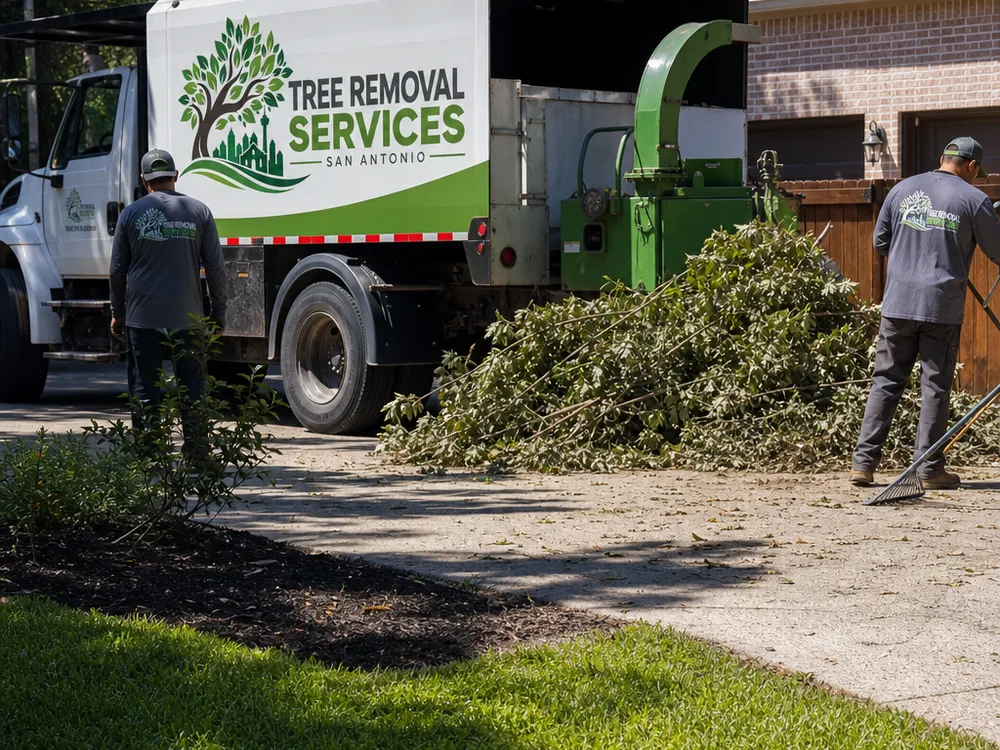
We rake, blow, and remove brush and limbs from the work area. If you want wood left for firewood-sized rounds, confirm that preference during the walkthrough so it is staged where you want it.
San Antonio tree pruning typically runs about $200 to $900 for routine trimming on one to a few trees, with complex or high-risk pruning commonly landing in the $900 to $2,500+ range. A small tree with basic clearance needs costs less, while large mature canopies over roofs, tight side yards, or multi-stem trees take more time and control.
Your price depends on tree size and species, how much is being removed, access for crews and equipment, proximity to structures, and whether rigging is needed to lower limbs safely. The exact cost is confirmed after an on-site evaluation so the scope and cleanup expectations are clear.
The best time depends on the tree species and the goal, but many routine pruning jobs can be done any time when cuts are kept reasonable and targeted. Storm-damage cleanup, deadwood removal, and hazard reduction are often time-sensitive, while aesthetic shaping can usually wait for a calmer weather window. During the on-site visit, we will recommend timing based on the tree's condition and what you need to fix—clearance, safety, or structure.
A branch is a hazard when it has a high chance of failure and a meaningful target underneath, such as a roof, driveway, or high-traffic walkway. Red flags include deadwood, cracked unions, long heavy limbs extending over structures, and branches with visible splitting or included bark at the attachment. If you can see a problem but cannot judge the attachment point from the ground, an on-site inspection is the safest way to decide what should be removed versus reduced.
Correct pruning minimizes stress by limiting the amount removed at one time and by placing cuts at proper locations, like the branch collar or to a suitable lateral. Poor cuts, excessive removal, and topping create larger wounds and more stress. We focus on targeted cuts that address your safety and clearance needs while keeping the canopy stable.
Yes, pruning service typically includes cleanup and haul-off of the brush and limbs created by the work, unless you request that wood be left on site. If you want logs or rounds staged for your own use, mention it during the walkthrough so we can place them where they will not block access or damage turf.
If limbs are near energized utility lines, the safest approach may involve the utility provider for line-clearance work, depending on the exact situation. We can evaluate the tree and explain what is safe for a standard pruning crew to handle versus what should be coordinated with the utility. If you are unsure, show us the closest span and service drop during the visit so we can plan correctly.
Most residential pruning jobs take a few hours to a day, depending on tree size, access, and how controlled the lowering needs to be near roofs, fences, and landscaping. A small tree with simple clearance work is usually quick, while a large mature canopy can require more setup, rigging, and careful cleanup.
Tell us what you want to fix, clearance, storm risk, or shape, and we will inspect the tree, define the scope, and recommend cuts that keep your yard safer without compromising the tree's structure.